When buying a ceramic item, choosing only by design and colour is not always enough. Two products that look very similar can differ significantly in surface finish, glaze quality, durability and manufacturing technology.
This raises an important question: how can you check ceramic quality and distinguish inexpensive, poorly finished ceramics from well-made products? Several signs can be inspected visually and by touch, while some important characteristics can only be confirmed through manufacturer information or specialised laboratory testing.
What does high-quality ceramic mean?
High-quality ceramic does not simply mean an expensive product. What matters is how well the ceramic body has been prepared, whether the item has been fired correctly, how well the glaze fits the ceramic surface and whether the finished product has the durability required for its intended use.
Well-made ceramic products generally have:
- a carefully finished and consistent surface;
- well-applied glaze;
- no unwanted cracks or chipped areas;
- a stable and properly finished base;
- durability appropriate for the intended use;
- carefully executed shapes and decorative details.
It is important to remember that handmade ceramics or intentionally irregular designs may not be perfectly symmetrical. This does not automatically indicate poor quality.
1. Inspect the ceramic glaze
Glaze is one of the most visible parts of a ceramic product. It creates the colour, glossy or matte finish and, in many cases, adds additional protection to the ceramic surface.
On a well-made product, the glaze should match the intended design and should not show random manufacturing defects.
Look for:
- whether the surface is evenly covered;
- unexpected unglazed areas;
- large numbers of tiny holes;
- areas where the glaze is peeling or flaking;
- unwanted networks of fine cracks.
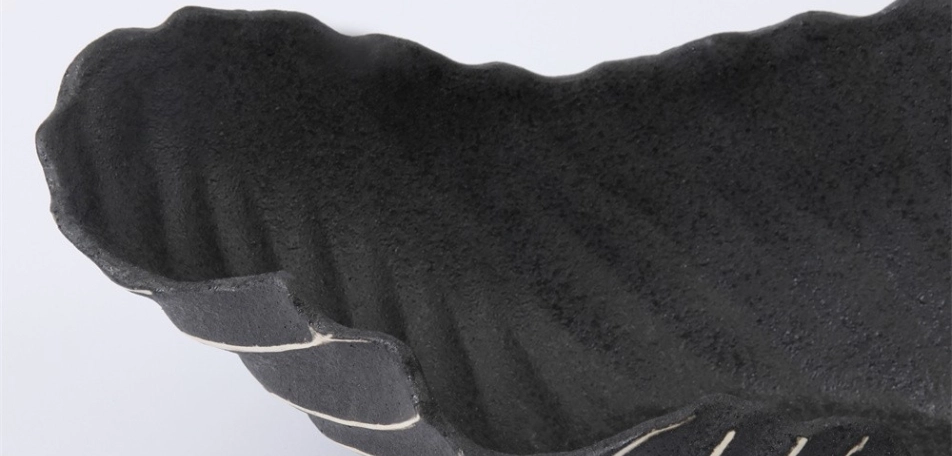
The intended design must also be considered. Some contemporary ceramics deliberately use reactive glazes, textured surfaces or irregular colour effects. In these cases, small variations in colour may be part of the design rather than a manufacturing defect.
2. Check for tiny holes and surface depressions
Very small pin-sized holes or depressions can sometimes appear in ceramic glaze. In ceramic production, these defects are commonly referred to as pinholes and pitting.
They can occur during firing when gases escape from the ceramic body through the glaze and the surface does not have enough time to smooth itself completely.
A large number of these imperfections on smooth ceramic tableware intended for everyday use can be an undesirable quality sign.
However, decorative, handmade or intentionally textured ceramics may naturally have some surface irregularities. It is therefore important to distinguish deliberate texture from an accidental manufacturing defect.
3. Look for fine cracks in the glaze
Pay close attention to fine lines on the glazed surface. If you see a network of hairline cracks resembling a spider web, this may be glaze crazing.
Crazing can occur when the ceramic body and glaze expand and contract differently as temperatures change.
In ordinary tableware designed for everyday use, unintended crazing can indicate a glaze problem and may become more noticeable over time.
There is also a decorative technique known as crackle glaze, where this cracked appearance is created intentionally. Therefore, the presence of fine lines alone is not enough to determine that a ceramic item is poor quality.
4. Inspect the edges of the ceramic item
When assessing ceramic quality, carefully inspect the most vulnerable areas: edges, corners, handles and other projecting details.
Damage caused during production, packing or transport is often most visible in these areas.
Check whether:
- the edges are chipped;
- there are fine structural cracks;
- handles and decorative parts are firmly attached;
- the glaze is flaking around the edges;
- there are sharp or excessively rough areas.
5. Examine the base of the ceramic item
The underside of a product can reveal useful information about its finish. Many ceramic products intentionally have an unglazed ring or section on the base because the item must rest on the kiln surface during firing.
An unglazed base is therefore not automatically a sign of poor quality.
What matters more is that the base:
- is properly finished;
- does not have excessively sharp edges;
- has no major chips;
- sits steadily on a flat surface;
- does not damage tables or furniture.
For plates, bowls and other products designed to sit flat, place the item on a level surface. If it rocks significantly, this may indicate warping — unless the irregularity is an intentional part of the design.
6. Is heavier ceramic always better quality?
A common belief is that the heavier a ceramic item is, the higher its quality must be. This is not a universal rule.
Weight depends on the type of ceramic, wall thickness, size, design and ceramic body used. Two products of the same size can have different weights while both being well made.
Very thick walls do not automatically indicate superior quality, just as thin ceramics are not necessarily cheap or poorly made. Different ceramics and porcelain products have different densities and technical characteristics.
Ceramic quality should therefore never be judged by weight alone.
7. Can ceramic quality be checked by sound?
A common recommendation is to tap a ceramic object gently and listen to the sound. In some cases, an unusual sound may help reveal a major structural crack, but this is not a universal quality test.
The sound depends on the product's shape, thickness, dimensions, type of ceramic, glaze and several other factors.
Therefore, a clearer ringing sound does not automatically mean that one product is better quality than another.
8. High-quality vs cheap ceramics — key differences
Price alone cannot determine ceramic quality. However, very low-cost manufacturing may sometimes involve less investment in quality control, surface finishing or firing processes.
The best approach is to assess the overall product rather than relying on a single characteristic.
| What to check | Well-made ceramic | Possible signs of poor quality |
|---|---|---|
| Glaze | Even and well finished according to the intended design | Random bare areas, peeling or numerous defects |
| Surface | Smooth or intentionally textured according to the design | Random deep holes, bubbles or sharp areas |
| Cracks | No unwanted structural cracks | Fine or deep accidental cracks |
| Edges | Properly finished | Chipped, sharp or damaged |
| Base | Stable and carefully finished | Rocks significantly or has rough damage |
| Overall finish | Controlled shape and details | Obvious accidental deformation and poor finishing |
Is colour variation always a defect?
No. Reactive glazes, handmade surfaces and techniques that create slight variations in colour or texture are common in contemporary ceramics.
Two pieces of the same model may therefore not look completely identical. If the colour or texture variation is an intentional result of the production process, it is not a defect and can actually give each product an individual character.
The important distinction is between natural design variation and problems such as accidentally flaking glaze, damaged surfaces or structural cracks.
Appearance alone is not enough for ceramic tableware
When a ceramic product is intended to hold or serve food, food-contact suitability is important in addition to visual quality.
A customer cannot determine visually, for example, how much lead or cadmium could potentially migrate from a glaze into food. These characteristics require appropriate laboratory testing.
When purchasing ceramic tableware intended for food contact, consider the intended use of the product, manufacturer information and relevant quality or safety documentation.
Should decorative ceramics and ceramic tableware be evaluated in the same way?
No. A ceramic product should always be assessed according to its intended purpose.
For example, with a decorative ceramic vase, the main considerations may be visual finish, structural strength, glaze quality and surface condition.
For a bowl, plate or other item intended to hold food, additional considerations include food-contact suitability, an easy-to-clean surface and durability for everyday use.
How to check ceramics before buying — quick checklist
When examining a ceramic product before purchase, several important details can be checked within a few minutes.
- inspect the product under good lighting;
- look at the glaze from several angles;
- check for fine structural cracks;
- look for pinholes and bubbles;
- inspect the edges and corners;
- check the base;
- test stability on a flat surface;
- confirm the intended use and care instructions;
- for food-contact products, check the relevant safety information.
Why should ceramics not be judged only by price?
A very low price can sometimes be associated with more economical manufacturing methods, but price alone is not enough to determine quality.
It is also incorrect to assume that every expensive ceramic product is automatically of the highest quality. Price may also reflect design, branding, handmade work, a complex shape, packaging and other factors.
The best approach is to assess the product's actual finish, material, intended use and manufacturer information together.
Ceramic products in contemporary interiors
Well-made ceramics are not only interesting for everyday practical use. Their natural textures, shapes and colours make ceramic objects an important part of contemporary home decor in Georgia.
A ceramic vase, fruit bowl, serving bowl or other decorative object can remain a relevant interior feature for many years when chosen carefully. Contemporary ceramic products can be ordered online with delivery in Tbilisi, Batumi and throughout Georgia.