When planning an apartment renovation, most of the attention usually goes to walls, flooring, plumbing, electrical work and furniture. However, once the main work is complete, many people realise that the interior still does not feel fully finished.
The reason is simple: a renovated and furnished apartment does not always mean a completely styled home. The final appearance is shaped by lighting, curtains, rugs, mirrors, a vase, decorative accessories, table styling and other home decor.
Therefore, if you want to understand how much it costs to fully furnish and decorate a home, you should plan a separate budget for the final styling stage in addition to renovation and furniture. Below, we break down the main expenses and different budget levels.
Renovation cost and the cost of fully furnishing a home are not the same
One of the most common budgeting mistakes is treating the renovation budget as the total cost of a finished home.
In reality, the final cost is made up of several separate categories:
- renovation work;
- construction and finishing materials;
- plumbing and electrical work;
- kitchen and built-in furniture;
- upholstered and freestanding furniture;
- home appliances;
- lighting;
- curtains and textiles;
- rugs, mirrors and wall decor;
- vases, decorative figures and other interior accessories.
If you only account for the first four or five categories, the apartment may be ready to live in, but it can still feel visually empty or unfinished.
How much does the renovation itself cost?
There is no single universal renovation price. The cost depends on the condition and size of the apartment, the quality of materials, the complexity of technical work and what is included in the contractor's offer.
It is particularly important to clarify whether a quoted price per square metre covers labour only or includes materials as well.
For this reason, two very different quotations do not necessarily mean that one contractor is expensive and the other is cheap — they may include completely different scopes of work.
When building your budget, calculate renovation separately first and then move on to furniture and interior styling.
Why should furniture be calculated separately?
Furniture can represent a significant part of the total budget, especially when kitchens, wardrobes and other systems are custom-made.
A typical furniture budget may include:
- kitchen cabinetry;
- wardrobes;
- bed and mattress;
- sofa;
- dining table and chairs;
- TV unit;
- coffee table;
- console or chest of drawers;
- desk;
- additional storage furniture.
Once the main furniture has been installed, it becomes much easier to see which surfaces are empty and where the interior needs an additional decorative accent.
What is included in a home decor budget?
Home decor does not simply mean a few small decorative figures. In a fully styled interior, this category can include a wide range of details.
For example:
- vase;
- fresh or artificial flowers;
- decorative figures and sculptures;
- wall lighting;
- mirrors;
- artwork and wall decor;
- rugs;
- curtains;
- decorative cushions;
- trays;
- candles and candle holders;
- organisers;
- table and serving accessories.
These elements help transform a simply furnished room into a more complete and welcoming interior.
How much should you budget for home decor?
The exact amount depends on the size of your home and the level of styling you want. The figures below are planning examples rather than fixed market prices.
| Styling level | Example budget | What it may include |
|---|---|---|
| Minimal | 500–1,200 ₾ | Several vases, flowers, 1–2 decorative figures and small table decor |
| Balanced | 1,200–3,000 ₾ | Decor for several rooms, vases, figures, additional lighting, serving accessories and other details |
| Full styling | 3,000–6,000+ ₾ | Complete styling of several rooms, including lighting, rugs, mirrors, curtains, wall decor, vases and accessories |
The difference can be significant because one home may only need a few visual accents, while another may require complete styling of the living room, bedroom, dining room and entrance area.
Why can even GEL 500 of decor make a noticeable difference?
Improving an interior does not always require spending several thousand lari.
If the main furniture is already in place, a small number of carefully positioned items can significantly change how the room feels.
For example, a living room may only need:
- one distinctive vase;
- 2–3 artificial flowers or decorative branches;
- one decorative figure;
- a small coffee-table arrangement;
- additional decorative lighting.
The key is not the number of objects, but how well they work with each other and with the furniture.
A vase — a relatively small expense with a strong visual effect
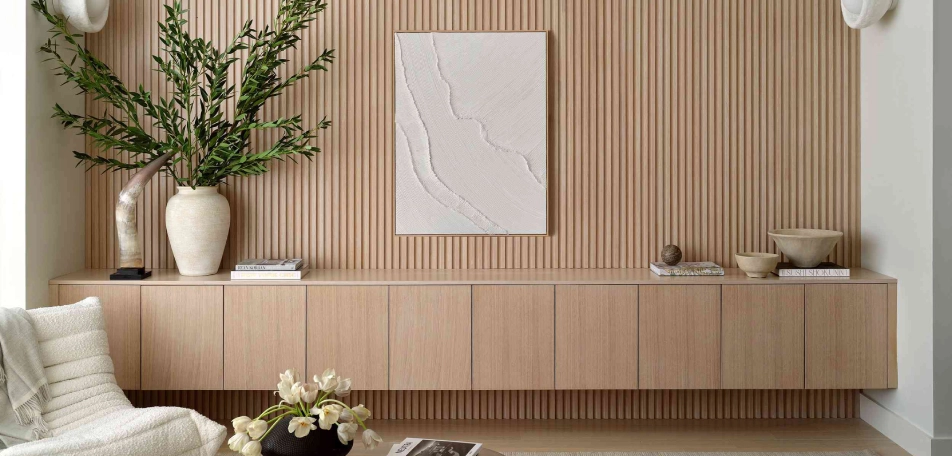
A vase is one of the easiest ways to style an empty surface. It can be placed on a chest of drawers, console, TV unit, dining table or coffee table.
A contemporary vase can be used with flowers or displayed on its own.
This is particularly useful when you do not want to buy a large number of small accessories. One well-shaped vase can often make a stronger impression than several unrelated decorative objects.
How much difference do flowers make?
Adding a botanical element makes a room feel more lively and natural.
If you do not want the maintenance of fresh flowers, you can use artificial flowers.
A large bouquet is not always necessary in a contemporary interior. One or two long branches can often create a more refined and minimalist result.
Why should lighting be part of the furnishing budget?
Good furniture and decor may not look their best if the room is poorly lit.
A single central ceiling light is often not enough to create a warm and comfortable atmosphere. Additional wall lighting can highlight a wall, artwork, a console or a decorative arrangement.
Decorative lighting should therefore be considered during budgeting rather than only after the renovation is finished.
Styling the living room — where does the extra budget go?
The living room usually requires more decorative elements because it contains several major visual zones.
Additional spending may include:
- coffee-table styling;
- TV-unit decor;
- console or chest-of-drawers styling;
- wall decor;
- rug;
- curtains;
- additional lighting;
- decorative cushions.
You do not need to style every zone at the same time. Start with the most visible and empty areas.
Is the bedroom cheaper to style?
Often, yes, because bedrooms usually require fewer decorative accents.
It may be enough to add:
- curtains;
- bedding and textiles;
- one small vase;
- chest-of-drawers decor;
- a mirror;
- soft additional lighting.
A bedroom does not need many small decorative objects. A few calm and carefully selected details usually create a more organised environment.
A kitchen and dining area are not complete with furniture alone
Once the kitchen has been installed, the dining table, kitchen island or part of the worktop may still need a visual accent.
Modern tableware, fruit bowls, serving trays and other functional decor work especially well here.
The advantage of these products is that you are not spending only on decoration — they also have a practical everyday use.
How important are curtains and rugs?
Without these two elements, many newly renovated apartments can still feel visually cold and unfinished.
Curtains soften a large window area, while a rug helps visually connect pieces of furniture into one composition.
Their cost should therefore be included in the overall furnishing budget from the beginning.
How should you divide your budget?
One of the safest approaches is to divide spending into stages.
Stage 1 — essential renovation work
Electrical work, plumbing, walls, flooring, ceilings and other technical tasks.
Stage 2 — essential furniture and appliances
Kitchen, bed, sofa, wardrobes, dining table and necessary appliances.
Stage 3 — lighting and textiles
Curtains, rugs, additional lighting and other larger visual elements.
Stage 4 — home decor
Vases, decorative figures, flowers, trays and other small and medium-sized accessories.
This approach helps prevent a situation where the entire budget has already been spent after renovation, leaving nothing for the details that make the interior feel complete.
How can you save money without making the interior look cheap?
The best way to save is not to buy a large number of the cheapest possible objects. It is usually better to use fewer pieces and choose them more carefully.
You can:
- style the most visible areas first;
- use one stronger focal piece instead of several small items;
- choose neutral colours that remain easy to combine later;
- use functional decor;
- avoid buying everything for every room at once;
- keep a consistent colour palette.
Why should you not fill every empty space?
A fully styled interior does not mean that every shelf, table and corner should be filled with decor.
In contemporary and minimalist interiors, empty space is just as important as the decorative objects themselves.
A few carefully selected items often create a more refined and expensive-looking result than a large collection of unrelated accessories.
How much does it cost to fully furnish a 50–70 m² apartment?
It is impossible to give one exact figure, because the largest expenses — renovation, furniture and appliances — depend heavily on the quality level you choose.
A simple planning model can be used:
- calculate the complete renovation first;
- add furniture and appliances separately;
- then calculate lighting and textiles;
- finally, reserve at least several hundred to several thousand lari for the final styling stage.
If you prefer a minimalist interior, the decor budget can remain relatively modest. If you want curtains, rugs, mirrors, additional lighting and complete styling in every room, the additional cost rises considerably.
Furnishing a home in Tbilisi and Batumi — what should you consider?
When renovating or furnishing an apartment in Tbilisi or Batumi, do not rely on one headline price alone. Always clarify whether materials, delivery, installation and additional work are included.
The same principle applies to furniture and decor. Your final budget depends on the number of rooms, furniture sizes, materials and how completely you want to style each area.
Home decor at ADELYO
At ADELYO, you can choose contemporary home decor for the final stage of your interior — including vases, decorative figures, artificial flowers, lighting and functional accessories.
If you have an empty console, chest of drawers or table, you can begin with one vase and gradually add other details.
This approach allows you to divide your furnishing budget into stages and choose every item more thoughtfully. Online ordering is available with delivery in Tbilisi, Batumi and throughout Georgia.
Frequently asked questions
Is home decor included in the renovation price?
Usually not. A renovation quotation may include labour and certain materials, but furniture, curtains, rugs, vases and other decorative items are typically separate expenses.
How much money should I leave for decor after renovation?
The amount depends on the size of the home and the result you want. For minimalist styling, you can begin with a few key accents, while full styling of several rooms requires a much larger budget.
Should I choose furniture or decor first?
In most cases, it is better to choose the main furniture first. Once it is in place, you can determine the right size, colour and style of decor for each surface.
Do I need to decorate every room at the same time?
No. You can begin with the living room and the most visible areas, then gradually add decor to the bedroom, dining area and other spaces.