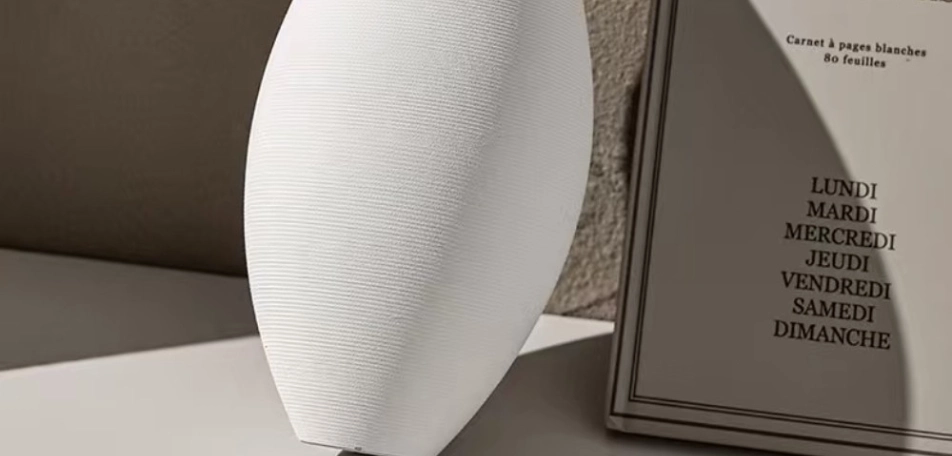
A ceramic vase is one of the most versatile decorative objects in a contemporary interior. It can be used for fresh or artificial flowers, as well as a standalone decorative accent. Ceramic texture, shape and glaze effects can turn even a single vase into an important visual feature.
However, choosing a ceramic vase based only on colour and design is not enough. Surface finish, glaze quality, cracks, base stability and overall workmanship should also be considered. In this article, we explain how to choose a high-quality vase and what details to check before buying.
Why are ceramic vases so popular?
Ceramic has long been used in interior design, but contemporary shapes, textures and glazing techniques have made ceramic vases even more diverse. One of their main advantages is that ceramic can look both minimalist and understated or sculptural and highly distinctive.
Ceramic vases are especially popular because they:
- work with many different interior styles;
- can be used with or without flowers;
- are available in a wide variety of shapes and textures;
- can become the main decorative accent in a room;
- combine well with wood, metal, glass and textiles;
- suit living rooms, bedrooms, entrance halls and dining areas.
What makes a high-quality ceramic vase?
A high-quality ceramic vase does not necessarily mean an expensive product or a famous brand. What matters most is the workmanship — how carefully the ceramic has been finished, the quality of the surface and glaze, the stability of the vase and the execution of its details.
A well-made ceramic vase generally has:
- a carefully finished surface;
- well-applied glaze that suits the intended design;
- no structural cracks or chipped areas;
- a solid and stable base;
- carefully executed shapes and details;
- well-finished edges.
Contemporary flower vases may intentionally have irregular shapes, textured surfaces or slight colour variations. These features do not always indicate a defect — they may simply be part of the design.
1. Check the glaze of the ceramic vase
Glaze is one of the main visual indicators of ceramic workmanship. It creates colour, matte or glossy finishes and often defines the overall character of the product.
When inspecting a vase, check whether:
- the surface has been finished consistently;
- the glaze is accidentally peeling or flaking;
- there are large numbers of pin-sized holes;
- parts of the surface are separating;
- there are unwanted cracks.
Reactive glaze and other decorative techniques can intentionally create colour transitions, different tones and textured effects. Two vases of the same model may therefore not look completely identical.
2. Look carefully for cracks
Structural cracks are particularly important to check when choosing a ceramic vase. Examine the exterior as well as the areas around the neck and base.
Fine lines may sometimes be only a decorative glaze effect, but a deeper crack extending through the ceramic body is a more significant issue.
Pay particular attention to:
- the neck of the vase;
- the area around the base;
- projecting decorative elements;
- areas where the form changes;
- the thinnest sections.
3. Examine the surface texture
A ceramic vase can be completely smooth, matte, relief-textured or intentionally uneven. Not every irregular surface is therefore an indication of poor quality.
The key is to distinguish deliberate design texture from an accidental defect. If a particular relief or texture is consistently repeated across the surface, it is probably part of the design. Random deep holes, sharp edges or flaking areas deserve closer attention.
4. Check the base of the vase
The underside of a vase is often one of the best areas for assessing the quality of its finish.
Some ceramic products have an unglazed ring or section on the base. This is normal and is often related to the firing process.
More importantly, the base should:
- stand steadily on a level surface;
- have no major chips;
- not have excessively sharp edges;
- not damage furniture surfaces;
- not rock noticeably.
Stability is particularly important when the vase will be placed on a table or chest of drawers. For tall models, it becomes even more important.
5. What should you check when choosing a tall ceramic vase?
A tall vase can look particularly striking in an interior, but because of its height and shape, stability becomes more important.
When choosing a tall ceramic vase, check:
- whether the base is wide and stable enough;
- whether the centre of gravity is too high;
- whether the vase rocks on a level surface;
- whether the neck is excessively thin or damaged;
- whether the overall proportions feel balanced.
If you plan to use long branches or artificial flowers, also take the weight of the arrangement into account.
6. Is a heavier ceramic vase always better quality?
No. Ceramic quality should not be judged by weight alone. The weight of a vase depends on its size, wall thickness, ceramic body and design.
A heavier vase may be more stable, which can be useful for tall models, but additional weight does not automatically prove better quality.
Choosing the heavier of two similar vases simply because “heavier means better quality” is therefore not a reliable approach.
7. Can you check ceramic vase quality by sound?
Ceramic objects are sometimes gently tapped and judged by the sound they make. In some cases, sound may help reveal a major crack or damage, but it is not a universal test of ceramic quality.
The sound is affected by:
- the shape of the vase;
- wall thickness;
- size;
- the type of ceramic body;
- the glaze;
- sculptural details.
It is therefore better to consider several different signs when assessing the overall quality.
8. How important is the shape of a ceramic vase?
Quality workmanship can be especially noticeable in complex vase designs. Human-inspired forms, abstract silhouettes, relief surfaces and asymmetrical shapes may require greater precision during production.
However, asymmetry is not automatically a defect. When a product is intentionally designed with an irregular form, small differences may be part of its visual concept.
Rather than looking for perfect symmetry, consider whether the product as a whole looks controlled, balanced and properly finished.
Ceramic vase for flowers — what should you consider?
If you plan to use a ceramic vase for flowers, the shape of the neck and overall size are just as important as design.
Narrow neck
A narrow neck helps hold several long branches or a small number of flowers. This shape is particularly effective for minimalist arrangements.
Wide neck
A wider opening is better for a fuller bouquet. The size of the flowers should still remain proportional to the vase itself.
Tall and narrow vase
A tall design works well with long decorative branches, artificial flowers and elongated botanical arrangements.
If you are mainly looking for a vase for floral arrangements, explore the flower vase collection.
Can a ceramic vase be used without flowers?
One of the main advantages of a ceramic vase is that it does not always need flowers.
A ceramic vase with an interesting shape, texture or colour can become an interior accent on its own.
Without flowers, a ceramic vase can be placed:
- on a television unit;
- on a living-room console;
- on a chest of drawers;
- on a bookshelf;
- on a coffee table;
- in a workspace.
How to match a ceramic vase with your interior
Minimalist interior
A simple ceramic vase works particularly well in a minimalist space. A neutral colour combined with an interesting texture can add detail without making the room feel overcrowded.
Contemporary interior
A contemporary setting allows for a more sculptural, asymmetrical or human-inspired vase. Such a model can work as a standalone art object.
Classic interior
More symmetrical forms, calm colours and refined details usually work better in a classic interior.
How to distinguish a design feature from a manufacturing defect
Contemporary ceramics often use irregular shapes, textured surfaces, reactive glazes and handmade effects. A perfectly uniform surface is therefore not always necessary for a product to be high quality.
A design feature usually looks intentional and consistent, while a manufacturing defect tends to appear random.
- subtle colour variation can be part of the design;
- consistent relief may be an intentional texture;
- an asymmetrical form may be part of the model's concept;
- a chipped edge is physical damage;
- a deep structural crack is an undesirable sign;
- randomly flaking glaze deserves attention.
How to check a ceramic vase before buying
A few simple checks can help you assess the condition of a ceramic vase before making a purchase.
- inspect the vase under good lighting;
- look at the glaze from several angles;
- check the neck and edges;
- look for deep cracks;
- inspect the base;
- place it on a level surface and check its stability;
- inspect decorative details for damage;
- consider the intended use and size of the product.
Ceramic vases at ADELYO
ADELYO offers contemporary ceramic vases in a variety of shapes and designs. The collection includes flower vases, tall and narrow vases, minimalist designs and distinctive human-inspired forms.
Explore the complete vase collection, choose a flower vase or browse the tall vase collection.
A ceramic vase can be combined with other home decor in Georgia, decorative figures, flowers and lighting to create a balanced composition. ADELYO products can be ordered online with delivery in Tbilisi, Batumi and throughout Georgia.